What are essential oils?
Essential oils are the natural plant scent extracted from plants. It is an aromatic chemical compound made from plant essence or scent.
Essential oils also can be created by manufactured in a lab mimics the scent at a fraction of the cost, they may lack the natural compounds that give essential oils the authentic therapeutic properties and raise concerns about their impact on health and the environment.
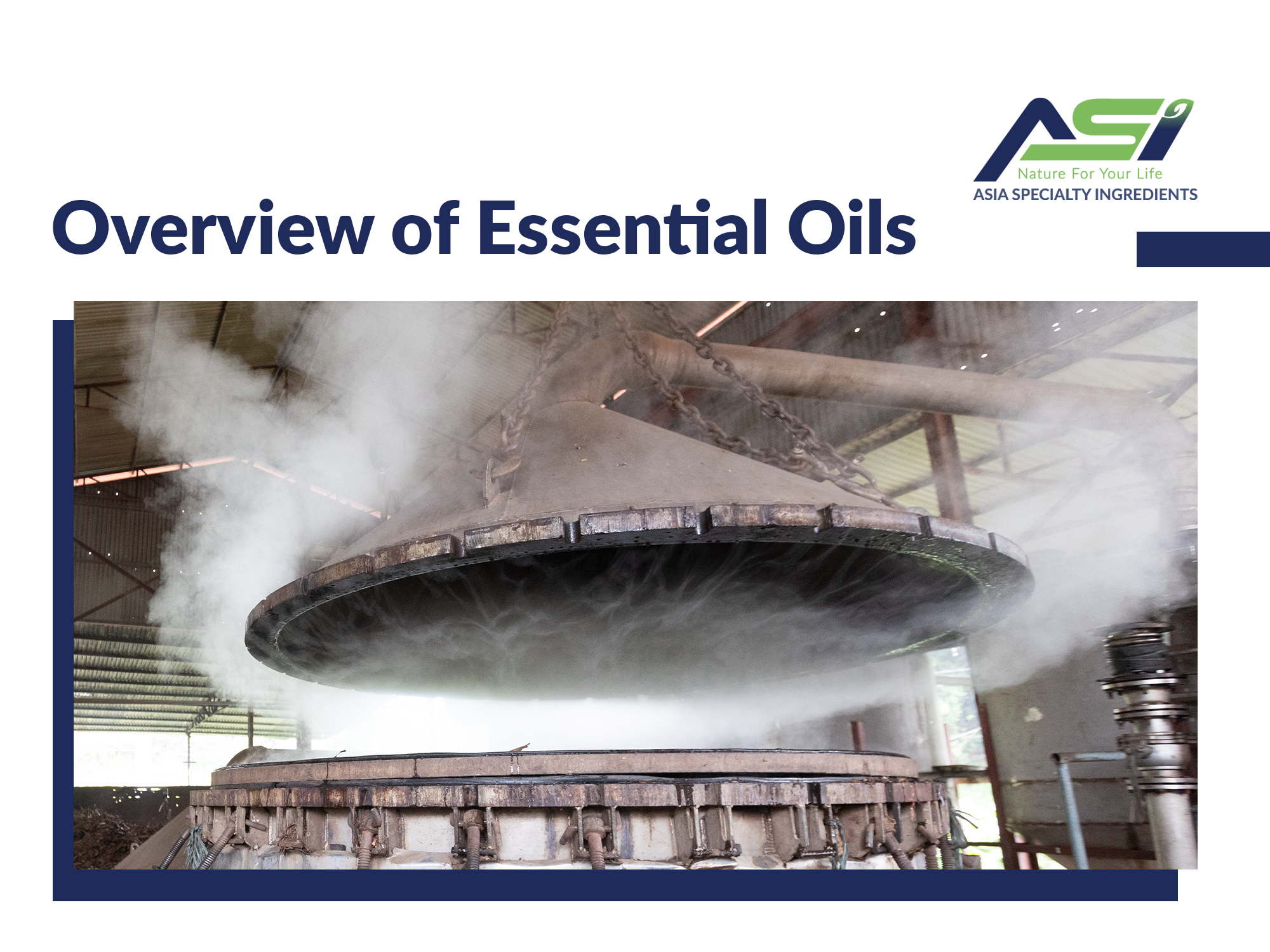
Most essential oils from natural resources are extracted through steam distillation and most commonly used in the practice of aromatherapy.
Essential oils play numerous roles in aroma industries such as fragrance generation (generating fragrances, flavours, and natural substances), delightness and wellness (promoting relaxation, stress relief, and overall well-being, as well as fragrances and aromatic compounds), flavor Industry (flavouring agents in foods and beverages), etc.
The production of essential oils
Essential oils are produced by a variety of methods such as steam distillation, water distillation, distillation methods, expression of oils, and extraction.
Steam Distillation
Steam distillation is the most widely used all over the world. In this process, a separate compartment is installed to generate the steam for the extraction process. The generated steam in a separate boiler will be blown directly into the botanical material or through the jacket in a still.
As the plant material gets heated up it will slowly release the vapors that travel through the condenser finally yielding essential oils.
The basic principle behind the distillation of two heterogeneous liquids, such as water and an essential oil, is that each exerts its own vapor pressure as if the other component were absent.
When the combined vapor pressures equal the surrounding pressure, the mixture will boil. Essential oil components, with boiling points normally ranging up to 300° C, will thus evaporate at a temperature close to the boiling point of water. The steam and essential oil are condensed and separated.
Hydrodiffusion is a variation on the normal steam distillation process where the steam enters from the top of the vessel and the oil and water mixture is condensed from the bottom. This method reduces the distillation time and is particularly suitable for distilling of seeds.
Essential oils produced in this way are frequently different from the original oil in the botanical in a number of respects. Chemicals that are not volatile in steam, for example 2-phenyl ethanol in rose oil, are mainly left behind in the still. Many of these non-volatile components are responsible for taste rather than odor effects. Some very volatile chemicals may be lost in the distillation, and the process itself may induce chemical changes such as oxidation or hydrolysis.
Water Distillation
Water Distillation is known to be an age-old technique. It is similar in many respects to steam distillation except that the botanical materials are immersed in water. This method needs to be burned high amount of fuel to generate a powerful steam
“Still odor” is a frequent problem with this type of distillation particularly if the still is heated directly. The burnt character known as “still odor” will gradually reduce on storage of the oils. The botanical material is separated from boiling water in the lower part of the still by a grid. If the still is heated carefully this method reduces the danger of “still odor.”
Water distillation is the method of choice for fine powders and flowers. Steam distillation fails to distill these materials effectively because it forms channels in powder and clumps flowers.
Steam distillation causes less hydrolysis of oil components, is much quicker and gives a better yield because less high boiling and water soluble components remain in the still. Steam distillation also removes the need to return the distillation waters to the still (cohobation).
In all these types of distillation the essential oil and water vapors are condensed in a condenser and collected in an oil separator. Most essential oils are lighter than water and will form a layer at the top of the separator.
Much more water is distilled over than essential oil is, so it is vital to remove the excess water continuously. Some oils are heavier than water, in which case the separator must be operated in reverse.
Distillation Methods
Dry distillation (Destructive distillation) is only suitable for a small range of essential oils and is often used to distill the oil from exudates such as balsams. Destructive distillation involves the formation of chemicals not present in the original botanical material. A typical example is cade oil, which is produced by the destructive distillation of juniper wood. The natural status and safety in use of such oils are open to consid-erable question.
Expression of Oils
Citrus oils are often isolated from the peel by expression (cold pressing). This process involves the abrasion of peel and the removal of the oil in the form of an aqueous emulsion that is subsequently separated in a centrifuge.
Expressed citrus oils have superior odor characteristics compared with distilled oils, because of the absence of heat during processing and the presence of components that would not be volatile in steam. They are also more stable to oxidation because of the presence of natural antioxidants, such as tocopherols, which are not volatile in steam. The lack of heat damage to the oil is also significant.
Extraction
Extraction of the oils with supercritical liquid Carbon dioxide (CO₂) provides the advantages of a cold process and the incorporation of some of the non-volatile components. It is expensive in terms of plant and, in some cases, results in an unusual balance of extracted oil components. Carbon dioxide extracts resemble essential oils more closely than oleoresins and, when well balanced, can offer unique raw materials for flavor creation.
The composition of essential oils
The following essential oils have been selected from many hundreds. They represent the major commercial oils used in flavorings. Only the most important information on composition is given. Chemical formulae of the key components are shown in the figure below. The quantities are typical but individual oils will often vary widely in practice.
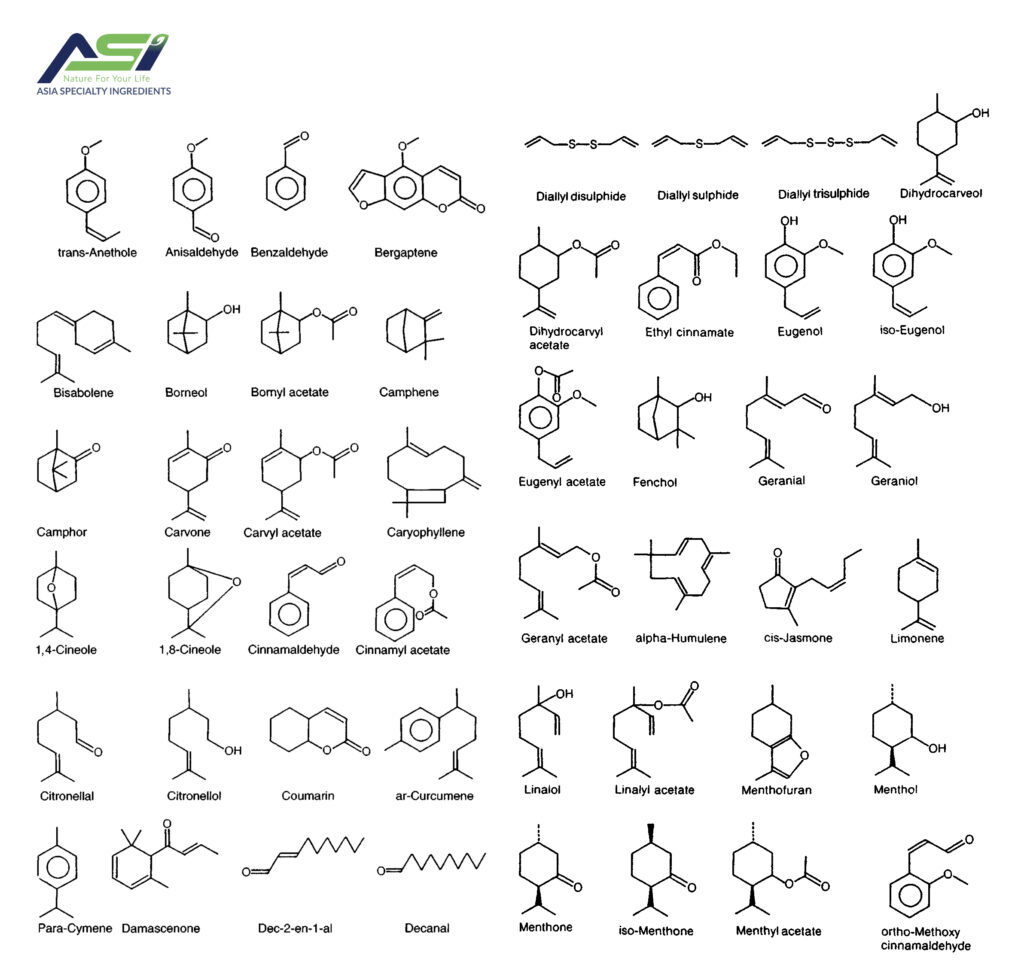
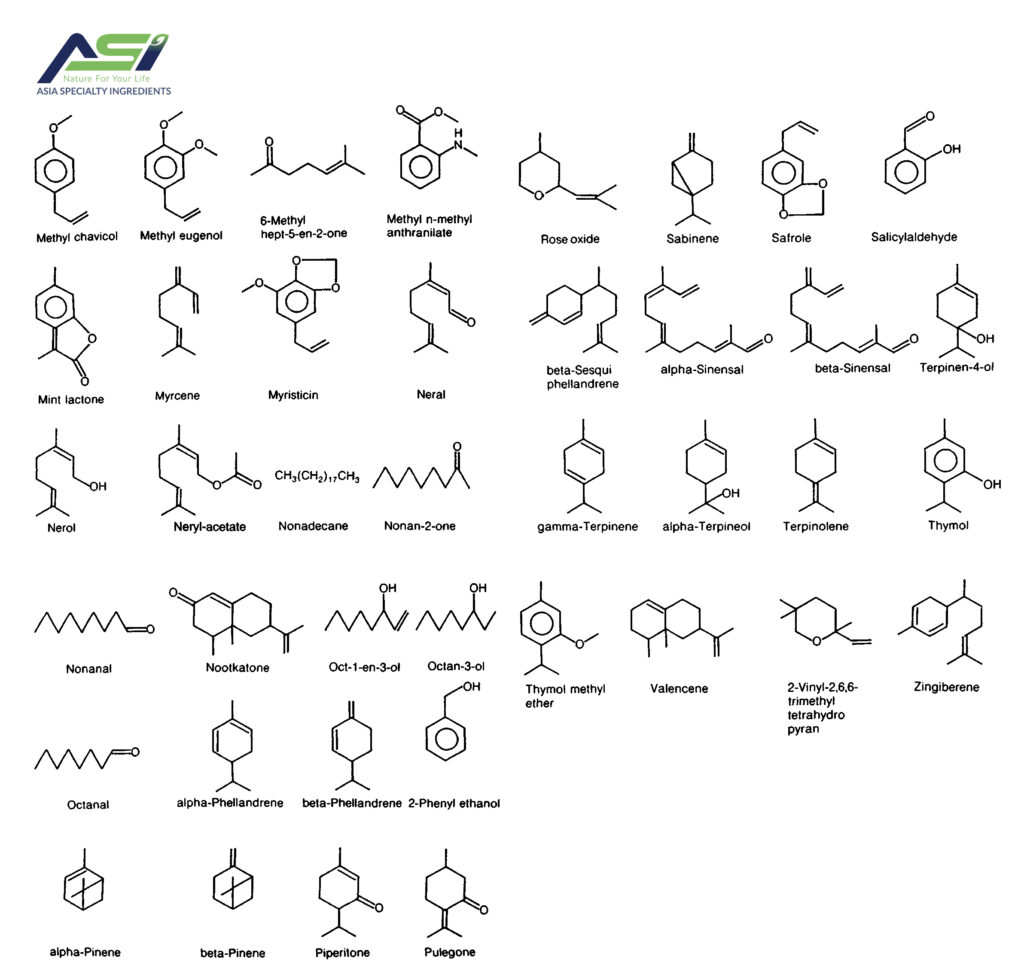
Some flavoring substances isolated from essential oils
Below are reports a selection of flavoring substances, mainly terpenes, isolated from essential oils. Terpenes are responsible for a great numbers of flavors and are among the main components of essential oils extracted from many different sources.
| Odor | Possible Source | |
| Anethol | Herbaceous-warm, anisic | Anise (Pimpinella anisum) Fennel (Foeniculum vulgare) Star anise (Illicium verum) |
| 1,8-Cineole | Fresh, camphoraceous-cool | Eucalyptus (Eucalyptus globules) |
| Allyl isothiocyanate | Pungent, stinging | Black mustard (Brassica nigra) |
| Benzaldehyde | Bitter almond | Bitter almond (Prunus amygdalus var.amara) |
| R (-)-Carvone | Warm-herbaceous, bread like, spicy, spearmint | Spermint (Mentha spicata) |
| S (+)-Carvone | Warm-herbaceous, bread like, spicy, floral, caraway, dill | Caraway (Carum carvi) |
| Cinnamic aldehyde | Warm, spicy, balsamic | Cassia (Cinnamomum cassia) Cinnamon (Cinnamomum zeylanicum) |
| Citral | Lemon | Lemongrass (Cymbopogon citratus, C. flexuosus) Litsea cubeba |
| Citronellal | Fresh, green, citrus | Eucalyptus citriodora |
| Decanal | Orange peel | Orange (Citrus sinensis) |
| Methyl chavicol | Sweet-herbaceous, anise, fennel | Basil (Ocimum basilicum) |
| Eugenol | Warm-spicy | Clove (Syzygium aromaticum) |
| Dimethyl sulfide | Sharp, green radish, cabbage | Commini (Mentha arvensis) |
| Geranyl acetate | Sweet, fruity-floral, rose, green | Lemongrass (Cymbopogon citratus) |
| Geraniol | Floral, rose | Palmarosa (Cymbopogon martini) Citronella (Cymbopogon nardus) |
| (Z)-3-Hexenol | Green, grassy | Corn mint (Mentha arvensis) |
| D-Limonene | Fresh, Orange peel | Citrus (Citrus species) |
| Linalool | Refreshing, floral-woody | Basil (Ocimum basilicum) Bois de Rose (Aniba rosaeodora) Camphor tree (Cinnamomum camphora) |
| Methyl N-methyl anthranilate | Musty-floral, sweet | Mandarin (Citrus reticulata) |
| Massoia lactone | Coconut | Massoia tree (Cryptocaria massoia) |
| Methyl cinnamate | Fruity-balsamic | Eucalyptus campanulata |
| Thymol | Sweet-medicinal, herbaceous, warm | Thyme (Thymus vulgaris) Origanum (Origanum vulgare) |
| Linalyl acetate | Sweet, floral-fruity | Bergamot mint (Mentha citrata) |
| Terpinenol-4 | Warm-peppery, earthy musty | Tea tree (Melaleuca alternifolia) |
| Nootkatone | Fruity, sweet, citrus, grapefruit peel | Grapefruit (Citrus paradisi) |
Factors Affecting Essential Oil Quality
The quality of an essential oil is influenced by various factors throughout the production process, from plant cultivation and harvesting to extraction, processing, and storage.
The factors that determine essential oil yield and composition are numerous. In some cases, it is difficult to isolate these factors from each other as they are interrelated and influence each other. These parameters include the seasonal variations, plant species, plant organ, climate, soil conditions and degree of maturity of the plant, geographic origin, and genetics.
The stage and timing of harvesting have a decisive impact on the concentration, composition, and quality of essential oils. The essential oil content is not constant but varies throughout the plant’s growth cycle.
The extraction method and processing conditions can further influence essential oil quality. Steam distillation, hydrodistillation, expression, and other extraction techniques may produce oils with different yields and chemical profiles because volatile compounds can be lost, transformed, or extracted to different degrees during processing. Consequently, the choice of extraction method should be appropriate for the plant material and the desired characteristics of the final oil.
Storage conditions are another major factor affecting quality. Essential oils contain volatile and chemically reactive compounds that are susceptible to oxidation and degradation when exposed to oxygen, light, heat, and humidity. Prolonged exposure to these conditions may alter the chemical composition, aroma, color, and functional properties of the oil. In particular, higher temperatures can accelerate oxidation, while light can promote photochemical degradation. Therefore, appropriate storage conditions, including protection from excessive heat and light and minimizing exposure to air, are important for maintaining the stability and quality of essential oils.
Finally, quality control and analytical testing are essential for ensuring the identity, purity, consistency, and safety of essential oils. Chemical analysis can be used to characterize the composition of an oil and detect changes or undesirable substances. Standards and quality-control procedures help ensure that essential oils meet appropriate specifications for their intended use.
Conclusion
Essential oils are complex mixtures of volatile compounds found in various parts of aromatic plants and are valued for their distinctive aromas, flavors, and diverse applications. They also serve as important sources of flavoring substances that are widely used in food, beverages, fragrances, cosmetics, and other industries. Understanding their production, composition, and the factors affecting their quality is therefore essential for obtaining consistent, high-quality essential oils and making effective use of their valuable properties.
Asia Specialty Ingredients (ASI), part of Asia Ingredients Group (AIG), specializes in the production and global export of essential oils, natural aromatics, and natural preservatives. Our range of products is meticulously processed using only the finest natural ingredients sourced from the typical lands of Vietnam, including Cassia, Basil, Star Anise, and more, ensuring good product quality. Contact us for more collaboration opportunity!
References:
- Ashurst, P. R. (1999). Food flavorings (3rd ed.). Aspen Publishers.
- Baser, K. H. C., & Buchbauer, G. (Eds.). (2015). Handbook of essential oils: Science, technology, and applications (2nd ed.). CRC Press.
- Dhifi, W., Bellili, S., Jazi, S., Bahloul, N., & Mnif, W. (2016). Essential oils’ chemical characterization and investigation of some biological activities: A critical review. Medicines, 3(4), 25. https://doi.org/10.3390/medicines3040025
- Gcabashe, N. H. (2026). Innovative approaches for enhancing the stability and functionality of essential oils in food systems: A critical and bibliometric review. Plants, 15(12), 1811. https://doi.org/10.3390/plants15121811
- Machado, C. A., Oliveira, F. O., de Andrade, M. A., Hodel, K. V. S., Lepikson, H., & Machado, B. A. S. (2022). Steam distillation for essential oil extraction: An evaluation of technological advances based on an analysis of patent documents. Sustainability, 14(12), Article 7119. https://doi.org/10.3390/su14127119
- Patle, A., Uchadia, P., Dubey, B. K., Basedia, D. K., & Patel, M. K. (2023). Source and properties of various natural flavor: A review. Panacea Journal of Pharmacy and Pharmaceutical Sciences, 12(2), 39–53.