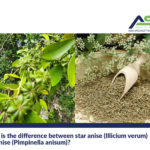
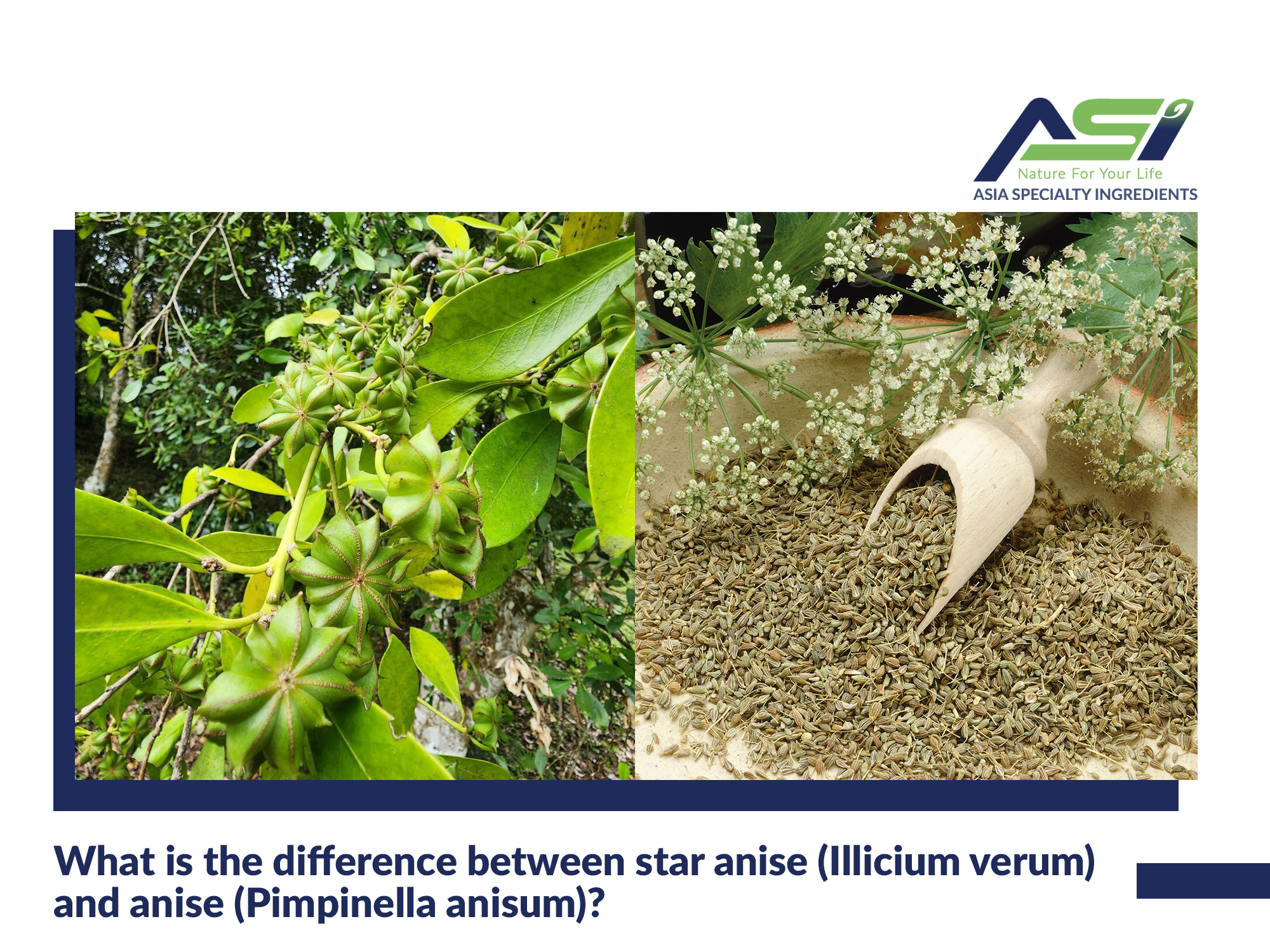
Star anise (Illicium verum) and Anise (Pimpinella anisum) could not be more different botanically. Scent-wise, however, they share a similar aroma, which is perhaps why these two very different plants are often confused. In this article, we’ll look at how to tell them apart and learn how to recognize both star anise and anise.
What is Star Anise
Star anise (Illicium verum) belongs to the botanical family Schisandraceae. It is a medium-sized evergreen tree native to south China and northeast Vietnam, reaching 20-60 feet in height.
Citing data from the World Spice Organisation, the Vietnam Pepper and Spice Association (VPSA) said Vietnam has around 55,000 hectares of star anise plantations, producing about 22,000 tonnes annually, reinforcing its position as the world’s second largest producer of the high value spice.
In Vietnam, star anise is grown mainly in Lang Son Province, with around 40,000 hectares, followed by Quang Ninh Province with 8,600 hectares, Cao Bang Province with 4,500 hectares and partly in Thai Nguyen Province. In China, star anise is grown mainly in the provinces of Guangxi and Yunnan.
The leaves of star anise are alternate, elongated-oval, glossy green and have a thick, leathery texture. Its flowers are single or arranged in clusters and are white, greenish-yellow or purple in color, depending on the variety. Its fruit is star-shaped, usually with eight points. Each seed pod contains a single, smooth, oval-shaped seed.
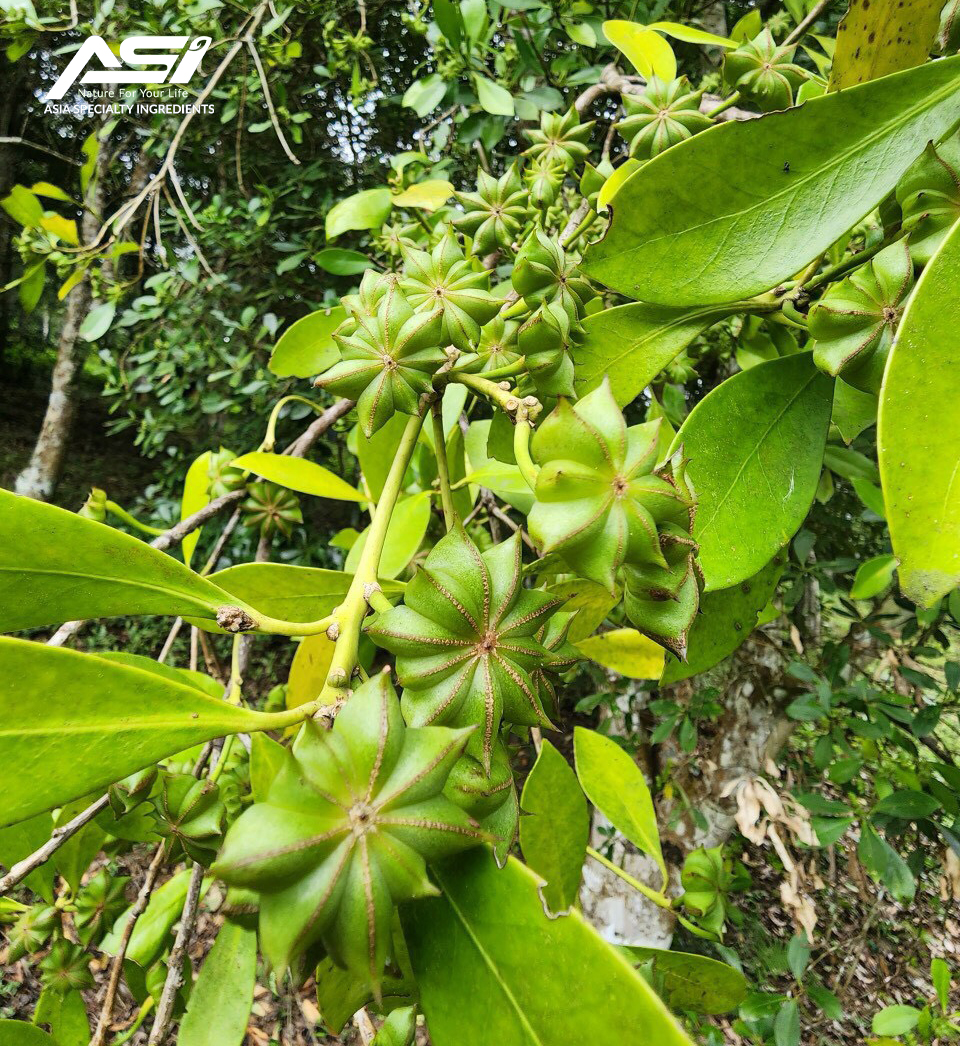
Star anise became known in the West in the 1600s when a sailor brought the star-shaped spice home to England.
The leaves and seed pod of the star anise tree have a distinct licorice flavor and fragrance. The fruit is harvested twice a year by farmers who climb and shake the trees to make the fruit drop to the ground. The green fruit can be eaten fresh, or it can be dried in the sun until it hardens and becomes the rich brown color.
The star anise seed pod is believed to maintain the balance of yin and yang in the body. It is also used to relieve pain and for respiratory problems. A tea made from star anise can aid digestion and reduce bloating. Studies have shown that star anise has antioxidant, antibacterial, anti-inflammatory, antiviral, and insecticidal effects (Zou, 2023).
Star anise plays an important role as a spice in Asian cooking. It is one of the spices in Chinese five-spice powder and Indian garam masala. It is also a key ingredient in Vietnamese Pho broth.
Star anise adds a nice flavor to coffee and tea, can be added to barbecue sauce and used to marinate meat. The whole pod is used in soups, stews, sauces and other dishes that need braising. When cooking is finished, the seed pod is removed. Star anise can also be ground but loses its flavor more quickly this way. The ground spice is added to a dish in the same way as any other spice.
The fruit, leaves, and branches of star anise (Illicium verum) are used to produce star anise oil. In Thai Nguyen Province and Lang Son Province, star anise oil is primarily extracted from the fruits, while Cao Bang Province mainly produces star anise oils from leaves and branches. The star anise essential oil is mainly extracted by steam distillation. It is a colourless to pale yellow liquid with a sweet aroma and flavour. Its CAS number is 84650-59-9 or 68952-43-2. The oil is used in the food and beverage industry such as flavoring of candies, baked goods, chewing gum, cigarettes, dental products, and flavored liqueurs such as Galliano, Sambuca, Absinthe, and Pastis, etc.
Star anise (Illicium verum) oil is considerably less expensive to produce, and has gradually displaced anise (Pimpinella anisum) oil in Western markets. While formerly produced in larger quantities, by 1999 world production of the essential oil of anise (Pimpinella anisum) was only 8 tonnes, compared to 400 tonnes from star anise (Illicium verum).
The main constituent of the star anise essential oil is trans-anethole with 80-90% in content. Other constituents include limonene, linalool, estragole, α-pinene, 1,8-cineole, Cris-anethole, P-anis aldehyde, A-terpineol…
What is Anise
Anise also is known as aniseed, and sweet cumin. Pimpinella anisumIn some texts, anise is referred to as A. officinarum or Anisum vulgare. Anise (Pimpinella anisum) belongs to the Apiaceae herb family. Anise, related to dill, cumin, fennel and caraway. It is a licorice-flavored herb of about three feet in height.
This herb has shallowly lobed leaves, divided into numerous leaves and feathery-looking leaves. It resembles Queen Anne’s lace when in bloom. Flowers are characteristic of the Apiaceae botanical family: White or yellow umbels, approximately 3 mm diameter, produced in dense umbels. The fruit is an oblong dry schizocarp, commonly called aniseed.
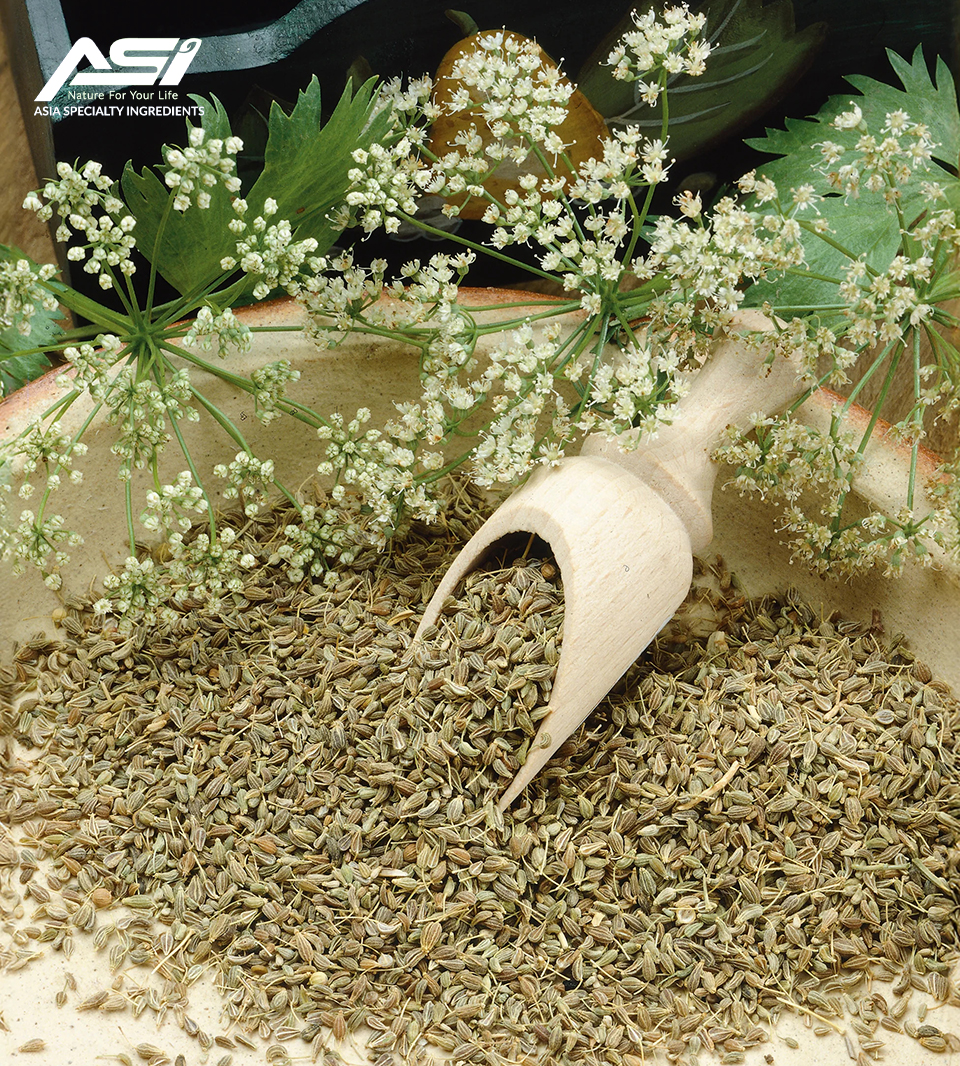
From seed it takes at least 120 frost-free days to reach maturity, and requires 70°F (21°C) temperatures to germinate. Anise develops a long taproot, which makes transplanting difficult. It does not like high heat and humidity, making it a challenging herb to grow in the southern U.S.
It is native to Egypt and the Mediterranean, but is also grown in the U.S., Europe, India, Spain, and Mexico.
Anise has a long-standing history of use as a spice and fragrance. It has been cultivated in Egypt for at least 4,000 years. Egyptians were reportedly the first to cultivate anise for use as a spice, though ancient culinary uses took place in Greece and Rome as well.
The use of anise as a digestive aid dates back to the Romans who ate anise seed cakes at the conclusion of feasts. Anise seed is part of the history of wedding cakes. A Roman wedding was sealed by breaking a traditional Must Cake (Mustacei) made of wheat, anise, lard, and cumin, over the head of the bride as a symbol of good fortune. The bride and groom would then eat a few pieces of the cake in a custom known as confarreatio–eating together. Afterwards, the wedding guests gathered up the crumbs as tokens of good luck (Wilson, 2005).
The Egyptians wrote about using anise nearly 4,000 years ago as a diuretic, as a treatment for digestive issues, and for relieving toothache pain. Greek and Roman writers including Hippocrates and Pliny the Elder wrote about the use of anise as a breath freshener and as a treatment for coughs. Even the mathematician Pythagoras weighed in on the benefits of anise saying that it could cure epilepsy!
Anise flavors a range of dishes from soups, salads, baked goods to meats, as well as curries, baked apples and cooked vegetables. It is also added to candies to give a pronounced licorice flavor. Tea also can be made from the seeds and leaves.
It is used to flavor commercial liqueurs and liquors such as Ouzo, Pernod, Sambuca, Absinthe, and Pastis.
Florence fennel or finocchio (the vegetable form of fennel), Foeniculum vulgare, also has a similar flavor to anise.
In traditional medicines, anise has a long history of use. It has been used to treat respiratory and gastrointestinal conditions, migraines, skin infections, mental distress, and hormonal issues, although there is not enough human clinical evidence to support the effectiveness of these uses today (Singletary, 2022).
Essential oil of anise is reportedly antiviral, antibacterial, insecticidal, as well as an antispasmodic, expectorant and has estrogenic effects. They are used to add fragrance to perfumes and soaps. They are also used as an anti spoilage agent and preservative.
Anise oil is obtained by steam distillation of the dried fruits of the herb. The highest-quality oils result from anise seeds of ripe umbels in the center of the plant. A major component of the oil is trans-anethole (75% to 90%), which is responsible for the characteristic taste and smell, as well as the medicinal properties of anise
Anise seed oil contains anethol, estragole, eugenol, pseudisoeugenol, methyl chavicol and anisaldehyde, coumarins, scopoleting, umbelliferon, estrols, terpene hydrocarbons, and polyacetylenes as the major compounds.
Today, the anise essential oil is used in cough preparations, as well as gum and oral health products (Singletary, 2022).
Difference between Star Anise vs Anise
The predominant licorice aroma is most likely the reason why one is mistaken for the other. The table below highlights the differences between them:
| Star Anise (Illicium verum) | Anise (Pimpinella anisum) | |
| Plant Type | Tree | Herb |
| Mature Size | Up to 65 ft (20 m) | 1-2 ft (30–60 cm) |
| Native Region | Southern China and Vietnam | Egypt and the Mediterranean |
| Plant Family | Schisandraceae | Apiaceae (parsley family) |
| Part Used | Star-shaped fruit (pericarp) | Seeds |
| Flavor Strength | Milder, sweeter licorice | Strong, spicy licorice |
| Common Uses | Five spice, broths, desserts |
Liqueurs, baked goods, sausages |
Conclusion
Although star anise (Illicium verum) and anise (Pimpinella anisum) have a similar scent, essential oils of both star anise and anise are widely used as a flavouring and fragrance by the food, pharmaceutical and cosmetic industries, but they differ in several ways.
Asia Specialty Ingredients (ASI), part of Asia Ingredients Group (AIG), specializes in the production and global export of essential oils and natural aromatics. Our range of products is meticulously processed using only the finest natural ingredients sourced from the typical lands of Vietnam, including Cassia, Basil, Star Anise, and more, ensuring good product quality. Contact us for more collaboration opportunity!
References
1. Cargo Handbook. (n.d.). Aniseed. Retrieved July 20, 2026, from https://cargohandbook.com/Aniseed
2. Drugs. (n.d.). Anise. Retrieved July 20, 2026, from https://www.drugs.com/npp/anise.html
3. Bonnie L. Grant. (2021, September 1). Anise Vs. Star Anise – Are Star Anise and Anise Plants the Same? Gardening Know How. https://www.gardeningknowhow.com/edible/herbs/anise/anise-vs-star-anise.htm
4. Maryann Readal. (2024, December 2). Herb of the Month: Star Anise – A Star in Asian Cuisine. The Herb Society of America. https://blog.herbsociety.org/herb-of-the-month/herb-of-the-month-star-anise-a-star-in-asian-cuisine/
5. Maryann Readal. (2023, March 8). Herb of the Month: Anise – A Sporting Herb. The Herb Society of America. https://blog.herbsociety.org/herb-of-the-month/herb-of-the-month-anise-a-sporting-herb/
6. Tijana Stojanović. (2018). The chromatographic analysis of the star anise essential oil as the potential biopesticide. ResearchGate. Retrieved from https://www.researchgate.net/publication/330369983_the_chromatographic_analysis_
of_the_star_anise_essential_oil_as_the_potential_biopesticide#pf5
7. Dantri International. (2026, June 30). Vietnam earns USD 22.8m from star anise exports. https://dtinews.dantri.com.vn/vietnam-today/vietnam-earns-usd-228m-from-star-anise-exports-20260630204820980.htm
8. Iplantz (n.d.). Illicium verum. https://www.iplantz.com/plant/876/illicium-verum/?fromSearch=true
9. Herbal Academy. (2020, August 7). Anise Monograph: Pimpinella Anisum. Herbal Academy. https://theherbalacademy.com/blog/anise-monograph-pimpinella-anisum/?srsltid=AfmBOormLIG1bt8Ol4AFDgLsIsp6yZ999nOGiTdyTzi0see-pxF7NDuE